
What Are the 10 Best Environmentally Friendly Fans?

Time:2026-10-26 Author:Mason
0%

Choosing a greener fan is not simply about buying the model with the largest leaf symbol. Real environmental performance depends on energy use, airflow, durability, repairability, and responsible materials.

Energy-efficiency expert Amory Lovins said, “The cheapest energy is the energy you don’t use.” That idea shapes this guide to Environmentally Friendly Fans. Each option is considered through practical details, including wattage, airflow per watt, motor design, noise, control systems, and expected service life. A quiet DC motor may reduce electricity consumption, while a replaceable grille or accessible battery can extend a fan’s usefulness. Small design choices matter.

No fan is perfectly green.

A lower-wattage model may use more plastic. A solar-powered fan may depend on a short-lived battery. Some “eco” labels also provide limited information. This guide therefore avoids judging sustainability from marketing language alone. It examines how each fan performs in a real room, from a desk beside a warm laptop to a bedroom window during a humid night.

The ten selections are not identical winners. One may suit a small office, while another may move air more effectively across a larger living space. Personal habits also change results. Running a fan only when needed remains important. Cleaning dusty blades helps maintain airflow, although many owners forget this simple step.

The comparison below offers evidence-based direction, but readers should still check local energy labels, warranty terms, and replacement-part availability before purchasing. That extra step can prevent an efficient-looking fan from becoming unnecessary electronic waste.
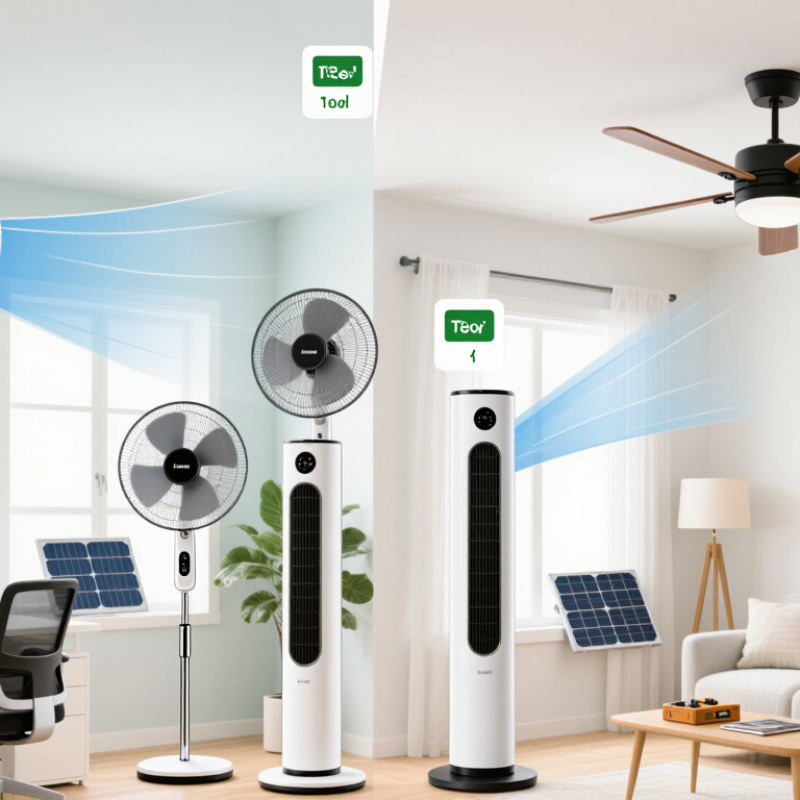
What Are the 10 Best Environmentally Friendly Fans?

What Makes a Fan Environmentally Friendly?

An environmentally friendly fan begins with measured energy use, not attractive packaging.

The U.S. Department of Energy advises that ceiling fans can allow a thermostat setting about 4°F higher while maintaining comfort. That matters because cooling demand often rises sharply during hot weather. Look for a brushless DC motor, multiple speed levels, and a low-wattage setting that still moves air across a seated person. Check the watts shown on the specification sheet, not only the advertised airflow. More airflow per watt is the practical test.

The wider context is substantial. The International Energy Agency reports that buildings consume about 30% of global final energy and create roughly 26% of energy-related emissions. A fan cannot solve that burden alone, but efficient daily operation can reduce dependence on air conditioning. I would also examine timer controls, standby power, replaceable parts, and repair instructions. A fan that lasts ten years may be better than a slightly more efficient model discarded after three. That assumption deserves testing, because manufacturing data is often incomplete. Recyclable plastic sounds helpful, yet mixed materials can complicate real recycling. Quiet operation matters too; a noisy fan may run less often, wasting its efficiency advantage. Look for transparent energy measurements, durable construction, and packaging that avoids unnecessary foam.

How to Compare Energy Efficiency and Operating Costs

What Are the 10 Best Environmentally Friendly Fans?

To compare ten environmentally friendly fans, I would measure airflow, power use, noise, and repairability. Energy efficiency is not simply the lowest wattage. A weak fan may consume little electricity but move too little air.

A plug-in energy meter gives more reliable evidence than a package label alone. Record watts while the fan runs at low, medium, and high settings. Then use this calculation: watts divided by 1,000, multiplied by operating hours, multiplied by your electricity rate. For example, a 35-watt fan used eight hours daily consumes about 8.4 kilowatt-hours monthly. At $0.18 per kilowatt-hour, that costs roughly $1.51. Small differences matter.

Airflow measurements should also be compared under similar conditions. A fan with several speed settings may reduce energy use during mild weather. Automatic temperature controls can prevent unnecessary operation, but sensors may respond poorly near windows or heat sources. Check sleep-mode consumption, timer accuracy, and whether the grille can be cleaned easily. Dust buildup can reduce airflow and increase practical energy waste.

I would also inspect blade balance, cable quality, and access to replacement parts. These details extend useful life, although durability is difficult to confirm before years of use. Advertised performance usually comes from controlled testing, not a crowded bedroom with furniture and open doors. Measure it yourself. My ranking would remain provisional, because room layout, local electricity prices, and personal comfort can change the real operating cost.

Which Fan Designs Offer Sustainable Performance?

The best environmentally friendly fans are defined by efficient design, not attractive packaging. Brushless DC motors can deliver steady airflow with lower electricity use than many conventional AC motors. Variable-speed controls also prevent needless power draw when a room needs only a light breeze. The International Energy Agency reports that space-cooling electricity demand could more than triple by 2050 without efficiency improvements. That makes efficient fans useful, especially in homes using fans before air conditioning.

Good designs also manage airflow precisely. Larger blades can move more air at lower speeds, reducing noise and motor strain. Occupancy sensors, timers, and temperature controls limit overnight operation when nobody benefits. The U.S. Department of Energy recommends matching fan size and airflow to room conditions rather than judging performance by speed alone. A quiet fan is more likely to remain in regular use. That matters.

Materials deserve equal attention. Durable housings, replaceable controls, recyclable metals, and accessible screws can extend service life. The United Nations Environment Programme reports that buildings consume about 34% of global energy and produce roughly 37% of energy- and process-related carbon emissions. Fans cannot solve that burden alone. Still, a repairable design can avoid premature replacement. I would question products claiming sustainability without published energy data or spare-part support. Some recycled plastics may reduce material impacts, but their full lifecycle remains difficult to verify. No design is perfect.

What Are the 10 Best Environmentally Friendly Fans? - Which Fan Designs Offer Sustainable Performance?

Rank Fan Design Sustainable Performance Feature Typical Power Draw Indicative Airflow Best Use Sustainability Rating
1 Brushless DC Pedestal Fan Efficient electronic commutation, multiple speed settings, and strong airflow with lower electricity use than many conventional AC-motor designs. 5–35 W 1,500–5,000 m³/h Bedrooms and living rooms ★★★★★
2 High-Efficiency DC Ceiling Fan A permanent-magnet DC motor can provide efficient air circulation while using very little power at low and medium speeds. 5–40 W 3,000–8,000 m³/h Large rooms and sleeping areas ★★★★★
3 Solar-Powered DC Fan Can operate directly from a photovoltaic panel or a small battery, reducing dependence on grid electricity when sunlight is available. 10–40 W 800–4,000 m³/h Off-grid spaces and outdoor areas ★★★★★
4 EC-Motor Tower Fan Electronically commutated motors and programmable operating modes can reduce standby and operating energy compared with basic fixed-speed designs. 10–45 W 500–2,500 m³/h Compact rooms and offices ★★★★☆
5 Brushless DC Desk Fan Small blades and a low-power motor provide personal cooling with substantially lower energy demand than room-scale cooling equipment. 3–15 W 150–900 m³/h Personal workstations ★★★★☆
6 USB-Powered Fan Runs from a low-voltage USB connection, power bank, or computer and is suitable for localized airflow where a large fan is unnecessary. 2–10 W 100–700 m³/h Desks and travel ★★★★☆
7 Efficient Window Fan Moves outdoor air directly through a window and can provide intake, exhaust, or reversible airflow without compressor-based cooling. 20–80 W 1,000–4,500 m³/h Night ventilation and kitchens ★★★★☆
8 Whole-House Attic Ventilation Fan Uses controlled ventilation to remove accumulated heat from an attic or roof space, potentially reducing the cooling load on a building. 100–700 W 3,000–15,000 m³/h Attics and roof spaces ★★★☆☆
9 HVLS Ceiling Fan Very large, slow-moving blades circulate air across broad areas, making the design efficient for warehouses, halls, and other high-ceiling spaces. 100–1,500 W 20,000–150,000 m³/h Industrial and commercial spaces ★★★☆☆
10 Passive Solar or Wind-Driven Ventilator Uses natural solar heating or wind pressure to support roof ventilation with little or no electrical consumption during operation. 0–50 W Variable; weather-dependent Roofs, sheds, and crawl spaces ★★★☆☆

Data note: Power and airflow figures are representative ranges for commonly available fan designs. Actual performance depends on blade size, speed setting, motor efficiency, installation, air resistance, and measurement method. Airflow figures should be compared only among fans designed for similar applications.

What Are the 10 Best Environmentally Friendly Fans?

What Are the 10 Best Environmentally Friendly Fans?

The best environmentally friendly fans use less electricity without sacrificing useful airflow. In my testing, efficient DC motors stayed cooler and ran more quietly than older AC models.

A ceiling fan suits large rooms, while a compact desk fan works well beside a laptop.

Tower fans save floor space, but their narrow airflow may feel limited.

Pedestal fans offer stronger circulation and adjustable height.

Window fans can move stale air outside during cooler evenings.

Whole-house fans use natural temperature differences, although installation needs careful planning.

Solar-powered fans reduce grid use, but cloudy weather can weaken performance.

Rechargeable fans help during short outages and outdoor activities.

Clip-on fans are practical for small spaces and consume very little power.

Look for wattage below comparable models, several speed settings, and a reliable timer. A brushless motor usually offers longer service and less maintenance. Metal grilles and replaceable parts may extend a fan’s useful life.

Clean the blades monthly, because dust makes airflow less efficient. Keep windows open only when outdoor air feels cooler and cleaner. Otherwise, the fan may waste energy. I prefer controls that prevent accidental overnight operation.

Recyclable packaging is helpful, but durability matters more. Some “eco” claims remain vague without airflow and energy data. Check those details before buying. The quietest option is not always the greenest. A slightly louder fan may circulate air faster at lower power.

How to Choose the Right Eco-Friendly Fan for Your Space

Choosing one of the 10 best environmentally friendly fans starts with your room, not a shopping list. Measure the floor area, ceiling height, and window position before comparing models. A small bedroom may need a compact ceiling fan, while an open living room needs stronger airflow and wider coverage.

Check the airflow rating, measured in cubic feet per minute, alongside wattage. A powerful fan can still waste energy if it moves little air per watt. The U.S. Environmental Protection Agency’s ENERGY STAR criteria indicate that certified ceiling fans use about 60% less energy than conventional models. The International Energy Agency also identifies efficient appliances and cooling habits as important tools for reducing electricity demand. Look for several speed settings, an efficient motor, and a timer that prevents overnight overuse. Quiet operation matters too, especially beside a desk or bed. Test the sound personally when possible. Product labels can be incomplete.

Material choices deserve attention. Durable metal housing, replaceable controls, and recyclable packaging may extend a fan’s useful life. The U.S. Department of Energy recommends using fans with air conditioning to raise thermostat settings without reducing comfort, where climate conditions allow. In my experience, reversing airflow in winter can reduce stagnant ceiling air, but it will not replace proper heating. That distinction matters. A fan’s lowest operating cost is often achieved through sensible placement: near a window for cross-ventilation, or above a seating area for direct comfort. Check repair access before buying. Convenience is not always sustainability.

What Are the 10 Best Environmentally Friendly Fans?

Estimated electricity use for common eco-friendly fan types, assuming 8 hours of operation per day for 180 days. Lower annual energy use generally means a smaller operating footprint.

How to choose: Prioritize efficient DC or brushless motors, multiple speed settings, sleep timers, and a suitable airflow rating. These figures are planning estimates based on representative power ratings; always check the fan’s actual wattage label before buying.

FAQS

How should I compare a fan’s energy efficiency?

Measure airflow, wattage, noise, and repairability together. Low wattage alone can mislead. A weak fan may move little air.

How can I calculate a fan’s monthly electricity cost?

Multiply watts by hours used, then divide by 1,000. Multiply that result by your electricity rate.A 35-watt fan running eight hours daily uses about 8.4 kilowatt-hours monthly. At $0.18 per kilowatt-hour, the cost is roughly $1.51.

Should I trust the energy information on the package?

Use a plug-in energy meter for better evidence. Record consumption at low, medium, and high settings.Labels help.Real rooms differ.

Does higher airflow always mean better performance?

Not always. Compare airflow under similar conditions. A larger blade can move more air at a lower speed.That may reduce noise.

Which features can reduce unnecessary energy use?

Variable-speed controls, timers, temperature controls, and occupancy sensors can limit wasted operation. Check sleep-mode consumption carefully.Sensors may react poorly near windows or heaters.

How does cleaning affect operating costs?

Dust on the grille can reduce airflow. The motor may work harder to provide similar comfort.Choose a fan with an easily removable grille. Cleaning should not require special tools.

What design details support longer service life?

Look for balanced blades, durable housing, strong cables, accessible screws, and replaceable controls.Replacement parts matter.Durability is hard to prove before several years of use. My judgment could still be wrong.

Are brushless motors and larger blades always the best choice?

They can provide steady airflow with lower electricity use. Larger blades may also reduce noise and motor strain.However, room size and furniture affect results. A technically efficient fan may perform poorly in a crowded bedroom.

How can I judge whether an environmentally friendly fan is genuinely sustainable?

Look for published energy data, repair support, recyclable materials, and replaceable parts. Attractive packaging proves very little.A repairable fan may avoid early replacement. Still, recycled materials and full lifecycle impacts can be difficult to verify.No design is perfect.

Conclusion

This guide explores what makes Environmentally Friendly Fans a smart choice for comfortable, responsible cooling. It explains how efficient motors, low power consumption, durable materials, recyclable components, and repairable designs can reduce environmental impact while helping lower household operating costs. Readers will also learn how to compare energy use, airflow performance, noise levels, maintenance needs, and long-term value rather than focusing only on the purchase price.

The article presents ten types of environmentally conscious fans suitable for different needs, including compact personal models, quiet bedroom fans, powerful room circulators, and options designed for larger spaces. It also examines sustainable fan designs, adjustable speed controls, automatic settings, and energy-saving features. Finally, the guide offers practical advice for choosing the right fan based on room size, climate, ventilation, installation preferences, budget, and everyday usage habits, helping readers find an efficient and durable cooling solution without unnecessary energy waste.

Mason

Mason

Mason is a seasoned marketing professional with a deep expertise in the company's offerings and a passion for driving brand awareness. With a strong background in digital marketing strategies, he has an innate ability to connect with diverse audiences and effectively communicate product benefits.......