
A Low Noise High-Pressure Fan must do more than move air against resistance. It should maintain stable airflow while keeping sound levels manageable in the intended working environment. For buyers comparing manufacturers in China, the details behind a product listing matter. Check the pressure-flow curve, motor specifications, impeller design, stated noise level, and test conditions. A decibel figure without its distance, load, or measurement method can be difficult to compare.
Noise matters. So does pressure.
This guide introduces ten Chinese manufacturers associated with low-noise, high-pressure fan production. It offers a practical starting point, not a substitute for technical verification. Consider whether a supplier can explain how its fan performs in a real installation, such as a compact ventilation cabinet, an industrial air system, or equipment with long duct runs. Ask for applicable test reports, product drawings, customization options, and details about service and spare parts. These answers can reveal more than a polished catalog.
A quiet fan may sound ideal in a showroom yet behave differently once connected to ducts, filters, or dampers. That is easy to overlook. Manufacturer capabilities and product ranges can also change, so confirm current specifications directly before making a decision. The companies covered here can help narrow the search, but the right choice depends on operating conditions, required airflow, pressure, available space, and acceptable sound levels. Even careful comparisons leave room for uncertainty; real operating data is valuable.
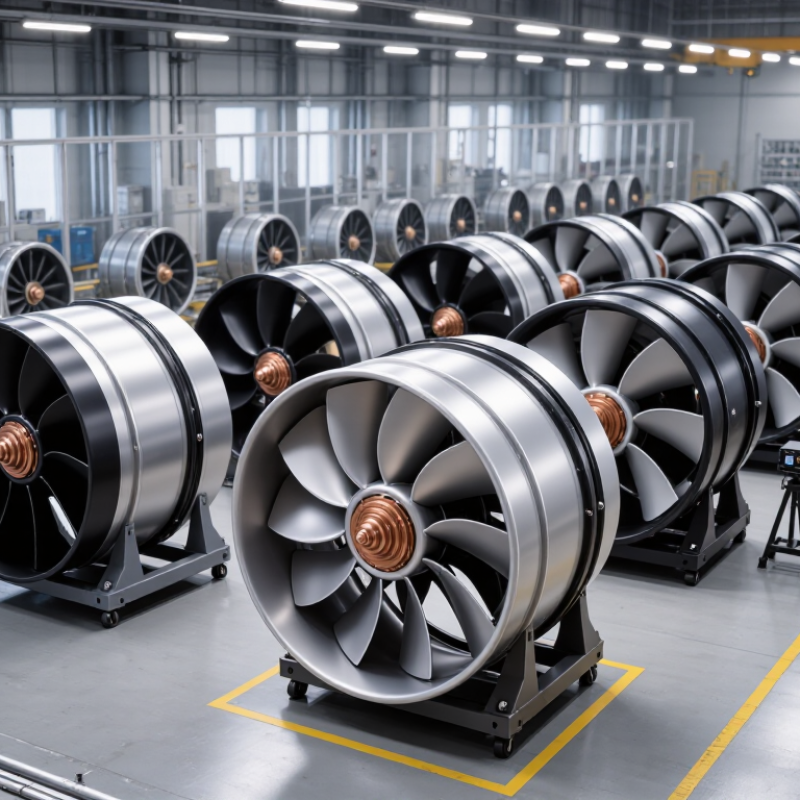
A low-noise high-pressure fan must move air against resistance without creating excessive sound. Resistance may come from long ducts, filters, bends, or compact equipment enclosures. Pressure alone does not define performance. Check the airflow and static pressure together, using the expected operating point rather than a headline rating.
Sound depends on more than the motor. Impeller balance, blade shape, rotational speed, and casing design all affect tonal noise and turbulence. A well-matched impeller can deliver the required pressure at a lower speed. That matters. Look for sound measurements taken under stated test conditions, since distance, room acoustics, and load can change the reported result. Vibration isolation and flexible connections may also reduce noise transmitted into nearby panels or ductwork. Small details count.
In practice, compare fans at similar airflow and pressure, not just similar sound figures. Listen for rattling or a sharp whine during operation. These can signal installation issues, wear, or an unsuitable operating point, though sound alone cannot diagnose the cause. There is a trade-off: added acoustic lining may reduce noise but also restrict airflow if poorly designed. “Quiet” is not a universal threshold. A useful specification reflects the actual system, and sometimes the quietest option is not the most efficient one. That deserves a closer look.
A low-noise, high-pressure fan must push air through resistance without creating excessive turbulence. That resistance may come from filters, ducts, heat exchangers, or crowded equipment cabinets. A fan that sounds quiet in open air may become noticeably louder once installed.
Blade shape and spacing help manage the trade-off. Carefully curved blades guide airflow more smoothly, while a well-matched housing reduces unwanted recirculation. Tight tip clearance can improve pressure performance, but poor alignment may cause rubbing or tonal noise. Small details matter. Motor balance and resilient mounting also limit vibration that can travel through a metal panel.
When comparing fan designs, check pressure-flow curves alongside noise figures. These measurements should reflect comparable speeds and test conditions; otherwise, the numbers can mislead. In practical installations, operating the fan near its efficient range often avoids unnecessary noise and power use. Still, ducts and filters change the result, sometimes more than expected. That part deserves more attention than it usually gets. A careful selection considers the full airflow path, not just the fan specification.
A useful comparison of China’s top 10 low-noise, high-pressure fan manufacturers should start with operating data, not broad claims. These fans move air against resistance from filters, ducts, and process equipment while keeping sound manageable. Ask for a pressure-flow curve and check the test conditions behind every noise figure. Measurement distance matters. So does the operating speed. Small details matter.
Tips: Request performance data at your intended airflow and pressure, not just the fan’s maximum rating. Check impeller balance, casing material, motor efficiency, and available maintenance support. If possible, review a test report or arrange a sample evaluation. Compare like with like.
A careful supplier comparison should also consider installation space, vibration, and expected duty cycle. A quiet fan can still disappoint if it cannot maintain pressure in the actual duct system. Some product pages leave test methods unclear; that is worth questioning, not overlooking. Treat any top-ten list as a starting point, since suitability depends on your application and verified specifications. Ask manufacturers how they handle custom configurations and what data they can provide before ordering.
In an ideal free field, sound pressure level from a point source decreases by approximately 6 dB each time the distance doubles. The chart shows this relative change from a 1 m reference; it is a physics-based illustration, not measured data or a ranking of manufacturers. Actual fan noise depends on the product, operating conditions, installation, and environment.
When comparing low-noise, high-pressure fan manufacturers, look beyond factory size and polished catalogs. Ask for examples of projects with similar airflow, pressure, and operating hours. Check who performs assembly, balancing, and final testing. A polished catalog is not proof.
Compare products at your actual duty point, not just their maximum airflow. Review the fan curve, static pressure, motor power, speed, and temperature limits. Noise figures need context: ask how and where sound pressure was measured, and whether the test setup matches your installation. A few decibels can matter in an enclosed plant room. Request vibration and performance test records for the specific model. Brochures can make this look simpler than it is.
For certifications, check the document’s scope, validity dates, issuing body, and covered product models. A factory management certificate does not automatically certify every fan. Ask for traceable inspection records, warranty terms, and spare-parts availability. Confirm that claimed certifications suit your destination market and application. Even with documents, some uncertainty remains; ductwork, mounting, and nearby surfaces can change measured noise. Leave room for that in your comparison.
High-pressure fans serve processes that need airflow against resistance, not just large volumes of air. In factories, they supply combustion air to furnaces, move material through pneumatic conveying lines, and support dust extraction across long duct runs. A steady draft matters: uneven airflow can leave deposits in a duct or cause a drying line to run inconsistently. Small details count.
Ventilation and cooling are another major application. The International Energy Agency’s 2018 report, The Future of Cooling, estimated that global cooling demand could triple by 2050, while the number of air-conditioning units could grow from 1.6 billion in 2016 to 5.6 billion. These figures describe cooling equipment, not fan sales, but they signal growing demands on air-moving systems. High-pressure models may be selected where filters, coils, or long ducts create substantial resistance.
Fans also support wastewater aeration, mine ventilation, and agricultural drying. The U.S. Department of Energy’s Improving Fan System Performance guide recommends assessing the complete fan system, including ducts, dampers, and controls. That is practical advice: a powerful fan cannot compensate for a poorly designed system. Selection still needs site measurements, such as airflow, static pressure, temperature, and dust conditions. A paper specification is not enough. I’d be cautious about treating any single efficiency figure as universal.
It moves air against resistance without excessive sound. Duct bends, filters, and tight enclosures can raise that resistance.
A fan’s maximum rating may not match your system. Compare its curve at the expected operating point.
Impeller balance, blade shape, speed, and casing design all matter. A sharp whine or rattle deserves attention.
Check the test distance, room conditions, and fan load. Similar test setups make comparisons more useful.
Vibration isolation and flexible duct connections may help. Nearby panels can still carry sound.
No. Poorly designed lining may restrict airflow. Quiet can come with a trade-off.
Ask for the fan curve, motor power, speed, temperature limits, and model-specific test records. Brochures alone are thin evidence.
Review the document scope, validity dates, issuing body, and covered models. Confirm warranty terms and spare-parts availability. I still find scope easy to overlook.
A Low Noise High-Pressure Fan is designed to move air against substantial resistance while keeping operating sound to a manageable level. Achieving this balance depends on factors such as impeller shape, motor performance, airflow paths, vibration control, and materials. A well-matched design can deliver the required pressure and airflow without unnecessary turbulence or mechanical noise, helping equipment operate more comfortably and efficiently.
China’s low-noise, high-pressure fan sector includes manufacturers serving a range of industrial and commercial needs. When comparing suppliers, buyers can consider pressure and airflow specifications, sound data, energy use, product testing, quality management systems, certifications, customization options, and after-sales support. These fans are used in applications such as ventilation, dust collection, air handling, industrial cooling, and process equipment, where reliable airflow must overcome filters, ducts, or other resistance. Selecting a suitable model begins with understanding the operating environment and verifying that its performance meets the project’s requirements.

Chiye Fan