
What Are the Top Dust Exhaust Fan Types in 2026?

Time:2026-11-23 Author:Amelia
0%

Dust control starts with the fan, but the right choice depends on the process. A woodworking shop moving dry chips has different needs from a metalworking line handling fine, abrasive dust. In 2026, buyers will still compare centrifugal, radial-blade, and axial designs. Yet airflow, static pressure, particle behavior, and maintenance access matter more than the label alone. A fan that looks powerful on a catalogue page may disappoint once ducts, bends, and filters add resistance.

The U.S. Department of Energy’s Improving Fan System Performance sourcebook explains why fan selection should account for the system’s operating point, not just its free-air rating. DOE motor-system guidance also estimates that motors use about 70% of industrial electricity, making efficient operation a practical concern. That figure covers many motor-driven applications, not dust fans alone. Still, it puts energy use in perspective. AMCA guidance on fan performance likewise supports comparing tested performance data, rather than relying on nameplate claims. Small details count: a narrow duct, a loaded filter, or a rough impeller can change real-world airflow.

This guide examines the top Dust Exhaust Fan types and where each may fit. Backward-curved centrifugal fans can suit many clean-air applications, while radial-blade designs handle tougher material streams. Axial fans may serve simpler, lower-resistance layouts. The trade-offs are not always neat. A quieter, efficient option may not tolerate the dust you actually collect. Check the data, inspect the process, and leave room to reconsider.
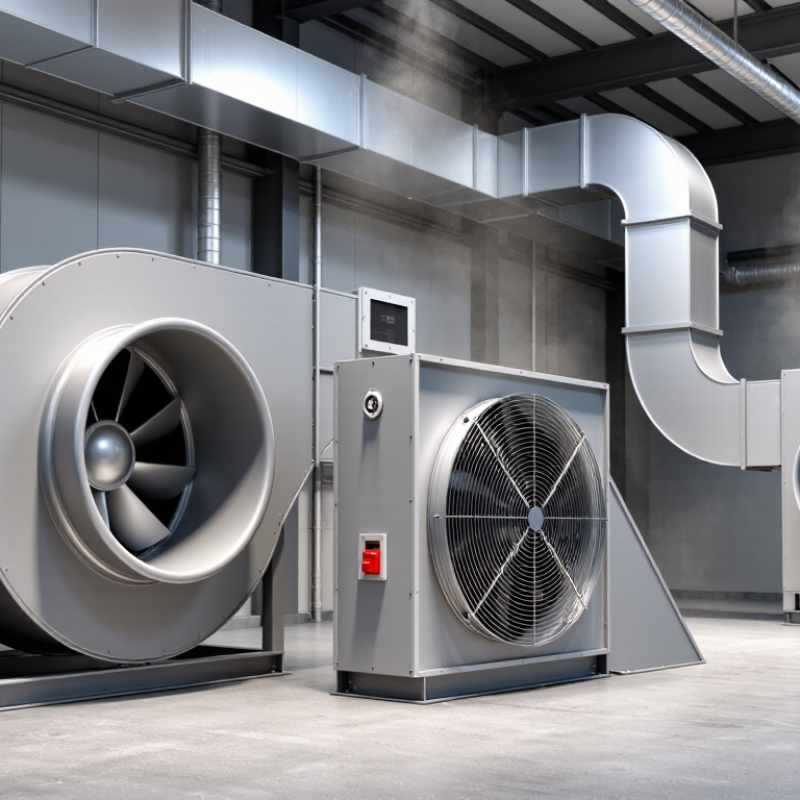
What Are the Top Dust Exhaust Fan Types in 2026?

How Dust Exhaust Fans Capture and Move Airborne Particles

Dust exhaust fans move contaminated air from a work area toward a collection or discharge point. Axial fans push large volumes of air along a fairly straight path. Centrifugal fans use a rotating wheel to turn airflow, making them useful where ductwork or filters create more resistance. Mixed-flow designs combine features of both. Actual performance depends on the system, not the fan label alone.

Capture starts near the dust source. A hood or inlet draws air across the release point, such as a cutting table or a powder-handling station. Keep it close. Airflow weakens with distance, so a hood placed too far away may miss particles that drift past it. Ducts then carry the dusty air to a collector. Smooth routes and fewer sharp bends can help maintain airflow.

Inside the collector, filters or other separators remove particles before cleaned air is recirculated or discharged, depending on the system design. The fan must provide enough airflow to overcome resistance from ducts and loaded filters. A system that sounds powerful may still capture poorly if its hood is badly positioned or its filter is clogged. That part is easy to overlook. Dust varies in size and behavior, so operators should check capture at the source and follow equipment guidance for cleaning and maintenance.

Which Dust Exhaust Fan Types Stand Out in 2026?

Among dust exhaust fan types, radial-blade centrifugal fans remain a practical choice for abrasive, particle-heavy air. Their open blades tolerate material buildup better than narrow, curved passages. They suit woodworking lines, grain handling, and metal grinding, where visible dust can collect near the hood. Rugged, not magic. Inspect the impeller for wear.

Backward-inclined centrifugal fans stand out when the airstream is relatively clean and energy use matters. The U.S. Department of Energy’s fan-system sourcebook identifies fan-system efficiency as an important industrial energy opportunity; actual savings depend on operating conditions and system design. Axial fans can move large air volumes, but they are usually less suitable for dusty, high-resistance ductwork. Check the system curve, not just the fan’s advertised airflow. A fan that looks right on paper may miss capture velocity at a distant pickup. That detail is easy to overlook.

For dusty service, compare material handling capability, static-pressure range, cleanout access, and wear protection. The U.S. DOE sourcebook also emphasizes matching fan operation to system demand, rather than relying on throttling alone. One useful field check is simple: inspect duct connections and measure airflow at the hood after installation. Results can disappoint. Dust properties vary, and one fan type rarely suits every process.

What Are the Top Dust Exhaust Fan Types in 2026? — Which Dust Exhaust Fan Types Stand Out in 2026?

Fan type Airflow and pressure profile Dust suitability Main advantages Key considerations Typical applications
Radial-blade centrifugal Generally suited to moderate-to-high system resistance; performance depends on fan size and operating point. Often selected for dust-laden airstreams, especially where a robust, relatively simple impeller is needed. Straightforward blade geometry can be easier to inspect and clean than more complex designs. Abrasive particles can wear the impeller and casing; material, speed, and wear protection should match the dust. Dust collection systems, woodworking extraction, and some industrial exhaust duties.
Material-handling centrifugal Designed to move air containing larger or heavier particulate; actual pressure capability varies by design. Appropriate when particles may pass through the fan rather than being fully separated upstream. Open or broad impeller passages can reduce the chance of blockage from larger material. Often less efficient than clean-air fan designs; particle size, concentration, and abrasion need assessment. Dust conveying, chip handling, and processes with coarse particulate in the airstream.
Backward-curved centrifugal Can deliver efficient operation in systems with appreciable resistance when correctly selected and operated. Best suited to relatively clean air or air cleaned before it reaches the fan; not usually the first choice for heavy, abrasive dust passing through the impeller. Can offer good aerodynamic efficiency in suitable clean-air applications. Dust buildup can affect balance and performance; provide effective upstream separation or filtration where required. Clean-side exhaust from dust collectors and filtered ventilation systems.
Axial-flow Moves large volumes of air efficiently in relatively low-resistance systems; ducting and filters can increase resistance substantially. Generally used for ventilation or dilution rather than conveying dense dust through the fan. Compact, direct airflow path can suit high-volume ventilation duties. Check the fan curve against system resistance; it may not provide enough pressure for long ducts or restrictive filtration. General workshop ventilation and low-resistance exhaust applications.
Portable extraction fan A mobile configuration, commonly using an axial or centrifugal fan; airflow and pressure depend on the installed fan and duct setup. Useful for temporary source capture or moving air through flexible ducting when the dust and task are compatible with the equipment. Can be moved between work areas and set up without a permanent duct network. Confirm filter capability, duct losses, electrical suitability, and safe handling of the specific dust; it is not automatically a dust collector. Maintenance work, temporary work zones, and localized extraction tasks.

Selection note: Match the fan to required airflow, total system pressure, particle size and abrasiveness, temperature, and dust-hazard controls. In many collection systems, the fan is installed on the clean-air side of the collector; applications that pass dust through the fan require equipment designed for that duty.

How Do Centrifugal, Axial, and Portable Fans Differ?

What Are the Top Dust Exhaust Fan Types in 2026?

Centrifugal, axial, and portable fans serve different dust-control needs. Centrifugal fans push air through a rotating impeller and housing, making them suited to systems with filters, long ducts, or high resistance. Axial fans move air parallel to the shaft. They typically fit high-volume, lower-resistance exhaust, such as a short wall outlet. Portable fans are about mobility, not a distinct fan design: many use axial or centrifugal impellers and connect to flexible duct near a task. Pressure matters. An axial fan may disappoint when paired with a restrictive filter.

The U.S. Department of Energy’s Improving Fan System Performance sourcebook reports that suitable fan-system improvements can reduce energy use by 20–50%. The practical lesson is to match the fan to measured system resistance and required airflow, rather than choosing by motor size alone. ACGIH’s Industrial Ventilation manual also emphasizes selecting duct transport velocity for the dust and process; one number does not fit every material. Real workshops are messier.

Tips: Check the fan curve at the expected operating pressure. Inspect duct bends, filter loading, and pickup position, too. A portable unit placed a few feet too far away may capture much less dust.

Where Is Each Dust Exhaust Fan Type Most Effective?

What Are the Top Dust Exhaust Fan Types in 2026?

Where Is Each Dust Exhaust Fan Type Most Effective?

Radial-blade centrifugal fans suit abrasive, coarse dust from woodworking, grain handling, and metal processes. Their open, sturdy impellers tolerate heavier particles better than tightly curved blades. Use them where dust travels through the fan, but inspect the impeller for buildup and wear. Small details matter. Backward-inclined centrifugal fans work well after a separator or filter, where the air is cleaner and duct resistance is significant. They can move substantial air efficiently, but sticky dust may collect on the blades. That choice is not always obvious.

Axial fans fit large-volume, low-resistance ventilation, such as general shop air exchange or removing warm, lightly contaminated air. They are usually a poor fit for long, restrictive ducts or dense dust transport. For high-resistance systems, including ductwork connected to filters, a centrifugal fan is generally more suitable. NIOSH’s Criteria for a Recommended Standard: Occupational Exposure to Wood Dust sets a recommended exposure limit of 1 mg/m³ as a time-weighted average. That figure does not select a fan, but it underscores why source capture and correctly sized ductwork matter. Choose based on dust abrasiveness, airflow, and system resistance—not the fan name alone.

What Are the Top Dust Exhaust Fan Types in 2026?

Where is each dust exhaust fan type most effective?

Relative suitability guide: 1 = less suitable, 5 = more suitable for the stated application. Ratings are qualitative selection guidance, not standardized test results. Confirm airflow, static pressure, dust characteristics, and safety requirements for each installation.

What Factors Matter When Choosing a Dust Exhaust Fan?

A dust exhaust fan should match the material, collection point, and duct system—not just a headline airflow rating. Check the required airflow at the hood, then account for resistance from filters, bends, long ducts, and dampers. A fan may move plenty of air in open space but perform poorly through a restrictive system. Static pressure matters.

Dust characteristics matter, too. Fine sanding dust behaves differently from heavy chips or damp fibers. Consider particle size, temperature, moisture, and how quickly dust builds up on filters. Filter loading can reduce airflow over time, so plan for accessible cleaning and replacement. Small details count. A quick paper test at the pickup point can reveal weak capture, though it cannot replace proper airflow measurements.

Look at construction, operating hours, noise, and installation space. Abrasive dust may call for wear-resistant components, while continuous use places greater demands on the motor and bearings. Check that the fan’s materials and configuration suit the dust being handled. Keep maintenance access practical; a filter that is difficult to reach may get neglected. It is easy to overfocus on fan size. Reviewing the full system with measured conditions usually gives a more dependable choice.

FAQS

How does a dust exhaust fan capture airborne particles?

A hood or inlet draws air near the dust source. Ducts carry the air to a collector, where filters or separators remove particles. Keep the hood close. Distance matters.

What is the difference between axial and centrifugal fans?

Axial fans move large volumes of air along a straight path, often with low resistance. Centrifugal fans use a rotating wheel and suit systems with filters or longer ducts. The fan label alone does not tell the whole story.

When is a portable dust exhaust fan useful?

A portable unit can be moved near a cutting table or powder-handling task. Many use axial or centrifugal designs and connect to flexible duct. Place it too far away, and it may capture much less dust.

Which fan works better with long ducts or restrictive filters?

A centrifugal fan is generally better suited to higher system resistance. Check its fan curve at the expected operating pressure. A large motor alone does not guarantee good capture.

What should I consider when choosing a fan for coarse or abrasive dust?

Radial-blade centrifugal fans can handle heavier particles in processes such as woodworking or grain handling. Inspect the impeller for buildup and wear. Dust can be rough on equipment.

Why can a powerful-sounding fan still capture dust poorly?

A badly positioned hood, sharp duct bends, or a loaded filter can reduce airflow at the source. Noise is not a reliable performance check. That is easy to overlook.

How do filters affect dust exhaust fan performance?

Filters add resistance, especially as dust builds up. The fan needs enough airflow to overcome that resistance. Check and clean filters according to the equipment guidance.

Are axial fans suitable for every workshop dust-control system?

No. They often suit general air exchange or short, low-resistance exhaust paths. Long ducts and restrictive filters may call for a centrifugal fan instead. The real workshop setup still matters.

Conclusion

In 2026, dust exhaust fans remain essential for removing airborne particles and improving air quality in workshops, production areas, and other dusty spaces. These systems draw contaminated air toward an intake, then move it through a suitable collection or discharge setup. The best choice depends on how much air must be moved, the resistance of the ductwork, the type of dust, and the layout of the workspace.

Centrifugal fans are suited to applications that need strong airflow against higher system resistance, while axial fans can efficiently move large volumes of air through relatively open spaces. Portable units offer flexibility for localized or temporary dust-control needs. When choosing a Dust Exhaust Fan, consider airflow capacity, static pressure, particle characteristics, noise, energy use, maintenance, and installation requirements. Matching these factors to the task helps create a practical, dependable solution for capturing and moving dust.

Amelia

Amelia

Amelia is a seasoned marketing professional with a wealth of expertise in our company’s core offerings. With an unwavering passion for driving growth and innovation, she plays a pivotal role in shaping our marketing strategies and enhancing brand visibility. A key aspect of her responsibilities......