
In modern industrial settings, the need for efficient air circulation is paramount. Efficient industrial fans play a critical role in maintaining optimal airflow. According to a report by the Department of Energy, effective ventilation can reduce energy costs by up to 30%. However, selecting the right fan can be challenging due to numerous factors, including size, airflow capacity, and energy efficiency.
Many industries struggle to achieve maximum airflow while minimizing energy consumption. Research shows that poorly designed ventilation systems can lead to increased operational costs and health risks for employees. In contrast, the right efficient industrial fan can enhance productivity and ensure a healthier work environment. Industries such as manufacturing, agriculture, and warehouses particularly benefit from high-performance fan solutions.
With numerous options available, organizations must consider various criteria to identify the top-performing fans. Balancing technical specifications with real-world performance is essential. By understanding the complexities of airflow dynamics and fan efficiency, industries can make informed decisions. This careful approach will ultimately pave the way for improved operational efficiency and sustainability in industrial operations.
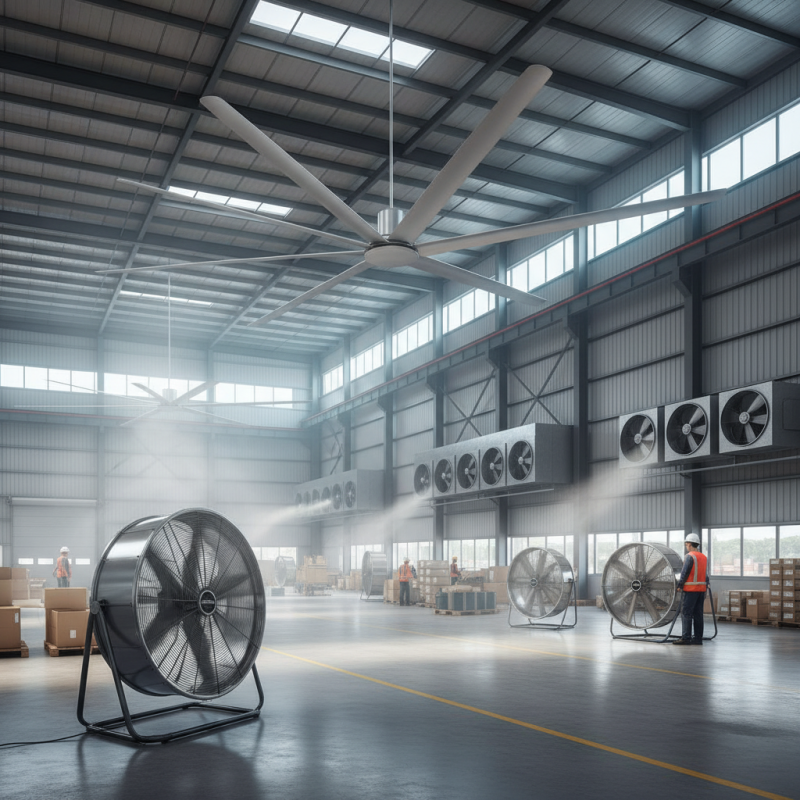
Industrial fans play a crucial role in various sectors, ensuring efficient airflow and maintaining optimal conditions. Different types of industrial fans serve unique purposes across industries. For instance, axial fans are optimal for large spaces where air movement is key, such as warehouses and factories. According to a recent industry report, axial fans can achieve an airflow rate surpassing 100,000 CFM (cubic feet per minute). These fans are essential in ventilating spaces and cooling machinery.
Centrifugal fans, on the other hand, stand out in handling high-pressure environments. They are commonly used in HVAC systems and dust collection applications. Their ability to move air at higher velocities while maintaining pressure is valuable. Data from the American Society of Heating, Refrigerating and Air-Conditioning Engineers (ASHRAE) indicates centrifugal fans are crucial in maintaining air quality in manufacturing processes.
Tip: Regular maintenance of industrial fans ensures longevity. Clean blades and check for imbalances to prevent efficiency loss.
Belt-driven fans offer versatility and speed variations, ideal for facilities with fluctuating demands. However, they require careful alignment and monitoring to avoid energy waste. It’s recommended to conduct periodic inspections to identify potential issues early on.
Tip: Invest in vibration analysis tools to monitor fan health regularly. This proactive approach can avert costly downtimes.
When selecting efficient industrial fans, airflow efficiency is paramount. Look for fans that specify their airflow ratings clearly. A fan that delivers high cubic feet per minute (CFM) is often essential for large spaces. Consider the blade design as well; wider blades typically offer better airflow. However, don’t overlook the noise level. Sometimes, high airflow comes with increased noise, which could affect the working environment.
Durability is another crucial factor. Industrial fans often face tougher conditions, so look for materials that resist wear and tear. Stainless steel and heavy-duty plastics are common choices. The power source is worth examining, too. Electric fans tend to be more energy-efficient, but those powered by alternative sources may work better in certain locations.
Lastly, consider ease of maintenance. Some fans can be a hassle to clean and repair. A simple design often leads to a longer lifespan. Think about all these features before making a choice. It’s easy to get caught up in high specs, but sometimes the simplest solutions work best. It's essential to reflect on how each feature aligns with specific needs.
When it comes to industrial fans, exceptional airflow performance is vital. According to the American Society of Heating, Refrigerating and Air-Conditioning Engineers (ASHRAE), optimal airflow can enhance energy efficiency by up to 40%. This efficiency significantly impacts larger facilities where proper air circulation is crucial for maintaining temperature and air quality.
Recent data indicates that axial fans tend to outperform other types in terms of airflow delivery. They are particularly well-suited for applications demanding high volume at low pressure. However, it is essential to understand that while axial fans excel, they may not be suitable for every environment. In some cases, centrifugal fans might be necessary due to their ability to handle higher pressures and resist dust buildup.
Another study from the Global Industrial Fans Market Report highlighted that the design and material of a fan can drastically affect its performance. Fans with robust construction, aiming for longevity, may experience reduced efficiency over time. Regular maintenance is needed to ensure they operate at peak capacity. Thus, investing in a quality fan is vital, but it should be paired with a commitment to upkeep to achieve the best results.
When considering industrial fans, energy efficiency is crucial for maximizing airflow. High-efficiency fans save money on energy costs and reduce carbon footprints. A thorough comparative analysis of leading fans reveals that design and motor technology greatly influence energy consumption. Some fans utilize advanced motor systems that provide better airflow while using less energy.
Tips:
Choose fans with high-efficiency ratings. Look for models designed specifically for your application. Proper fan placement can enhance airflow.
Another aspect to consider is the materials used in fan construction. Lightweight yet durable materials often improve performance. Metal blades usually deliver more power, but they consume more energy. Plastic blades are lighter and cheaper, but may not offer the same efficiency.
Tips:
Regular maintenance is important. Keep fans clean to ensure optimal airflow. Check for wear and tear periodically.
Finally, monitor your power usage. Some fans include energy monitoring features. Understanding your energy consumption can help identify potential savings. There’s always room for improvement in energy efficiency.
Maintaining industrial fans is crucial for optimal performance. Regular checks ensure efficient operation. Dust and debris can accumulate in blades and motors. This buildup reduces airflow and increases energy consumption. Set a routine to inspect the fans at least monthly. Cleaning is essential. Use compressed air or a soft brush. This prevents dust from affecting functionality.
Lubrication is another key aspect. Many fans have motors that require regular oiling. Lack of lubrication can lead to increased friction. This may cause premature wear and tear. Check the manufacturer's guidelines for the recommended type of lubricant. Ensure proper tension in the belts, as loose belts can slip and lead to decreased efficiency.
Don't overlook the electrical connections. Loose wires can cause short circuits or increase power consumption. Inspect wiring and connections during maintenance checks. Proper airflow is essential for any industrial setting. Ensure surrounding areas are free of obstructions. This allows fans to operate smoothly. Regular attention can enhance lifespan significantly.
| Model | Airflow (CFM) | Power Consumption (W) | Blade Diameter (inches) | Noise Level (dB) |
|---|---|---|---|---|
| Model A | 12,000 | 400 | 52 | 65 |
| Model B | 10,500 | 350 | 48 | 62 |
| Model C | 15,000 | 450 | 60 | 68 |
| Model D | 14,000 | 420 | 56 | 66 |
| Model E | 11,000 | 375 | 54 | 61 |
: Energy efficiency maximizes airflow, saves money, and reduces carbon footprints.
Look for fans with high-efficiency ratings designed for your specific application.
Lightweight materials improve performance, while metal blades offer power but consume more energy.
Inspect and clean fans at least once a month to ensure optimal airflow.
Regular cleaning, lubrication, and checking electrical connections are key practices.
Use compressed air or a soft brush to clean dust from blades and motors.
Loose belts can slip and decrease the fan's efficiency, causing performance issues.
Some fans have energy monitoring features to help identify consumption and savings.
Lack of lubrication increases friction, leading to premature wear and tear on motors.
Keep the area free of obstructions to allow smooth operation and proper airflow.
In the quest for optimal airflow in industrial settings, selecting an efficient industrial fan is crucial. This article explores various types of industrial fans and their applications across different industries, highlighting their specific use cases. Key features such as airflow capacity, energy efficiency, and durability are essential considerations when choosing the right fan for particular environments.
The article also presents a comparative analysis of energy efficiency among leading industrial fans, emphasizing the importance of minimizing energy consumption while maximizing performance. Additionally, practical maintenance tips are provided to ensure the longevity and effectiveness of these systems. Overall, understanding the diverse options and key aspects of efficient industrial fans can significantly enhance operational efficiency in any industrial application.

Chiye Fan